
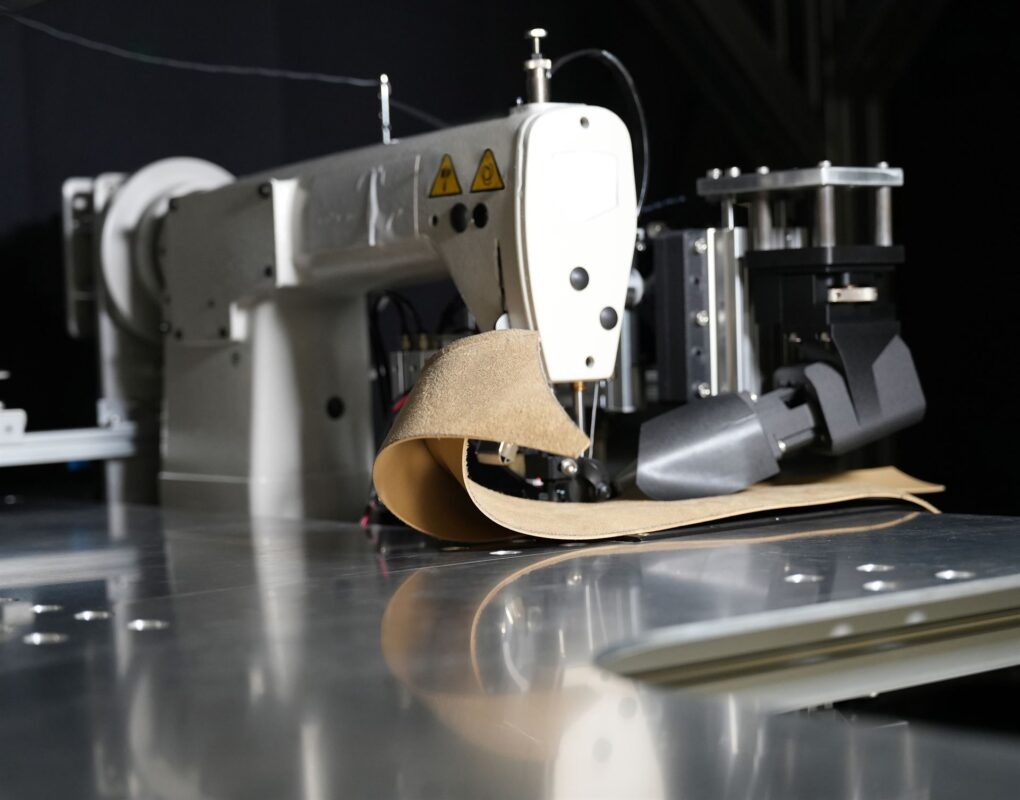
TransGP – Center for Garment Transformation Production, is shaping the future of the apparel industry through robotics and AI. The 2D and 3D automatic sewing systems without jigs enable the execution of complex stitching with high precision, supporting product personalization and optimizing the production process.
Sewing techniques play a core role
Sewing is a crucial step that determines the quality, fit, and finish of the product. However, the industry still heavily relies on manual labor, creating challenges in the face of skilled labor shortages and increasing market demands.
Reasons for applying robots and AI
To improve productivity and quality, many manufacturers are actively applying robotics and artificial intelligence. According to Mr. Minoru Yamaguchi – Technical Advisor of TransGP, automated sewing, especially 3D sewing, requires the integration of numerous technologies such as sensors, machine vision, tactile feedback, and robot control… but it is entirely feasible if implemented synchronously and cost-effectively.
2D & 3D jig-free sewing technology
Mr. Kazuhiro Kosuge – Deputy Director of TransGP, stated that 2D and 3D jig-free sewing technology simplifies operations, reduces errors, increases precision, and facilitates custom production. The system uses robotic arms to pick up fabric and AI-powered cameras to track stitching paths and adjust fabric tension, ensuring smooth and wrinkle-free seams.
Critical techniques
3D sewing is essential for creating close-fitting, flexible shapes for suits, dresses, sportswear, lingerie, etc. This technique is also applied to accessories like handbags, leather shoes, and car seats. Thanks to smart sensors, TransGP’s 3D sewing machines can handle curved fabric pieces while maintaining precise alignment and reducing manual errors.
2D jig-free sewing system

2D sewing technology uses robotic arms and cameras to automatically align fabric without the need for workers to manually fix each piece before sewing. The system can detect folds, track stitching lines, and adjust tension in real time, enhancing the accuracy and aesthetic quality of the product.
Driving force for development
TransGP was founded in 2020 by the University of Hong Kong and Tohoku University (Japan), aiming to enhance smart manufacturing capabilities. TransGP’s technology helps the garment industry leverage the young workforce, stabilize quality, and adapt to a labor market lacking skilled workers.
A new era
The AI sewing system learns how to handle fabrics from humans, enabling it to produce consistent stitches, reduce errors, and minimize waste. Manufacturing far from consumption centers complicates supply chains and increases inventory and CO₂ emissions. TransGP’s technology offers a solution to this problem, aiming for a flexible supply chain and sustainable production in the 21st century.
